
One of the world’s most intriguing cultural traditions is the Kumari living goddess of Nepal. The Kumari, who lives in Kathmandu and is regarded as a divine incarnation, symbolizes a special fusion of spirituality, history, and living heritage.
The Kumari is not just symbolic—she is believed to have held divine power during her reign. Chosen from the Newar Shakya community, she must strictly possess all those exceptional qualities, such as a flawless body, serene composure, and remarkable bravery. Her selection involves very spiritual rituals and ancient tantric tests, including observing her response to intense situations. For example; witnessing symbolic blood rituals or animal sacrifice. The community believes only the girl who shows no fear and meets all sacred criteria to be worthy of serving as the living goddess in human form.
History of the Kumari Tradition
This tradition goes back to the 17th century during the reign of King Jayaprakash Malla, the last ruler of the Malla dynasty in Kathmandu. Legend tells about the king who used to play the dice with Goddess Taleju, who also appeared to him in human form. When the queen accidentally saw them together, the goddess vanished immediately in anger. Before departing, she promised the King to return the body of a young girl from the Newar caste. The tradition of Kumari: The Living Goddess has started ever since then.
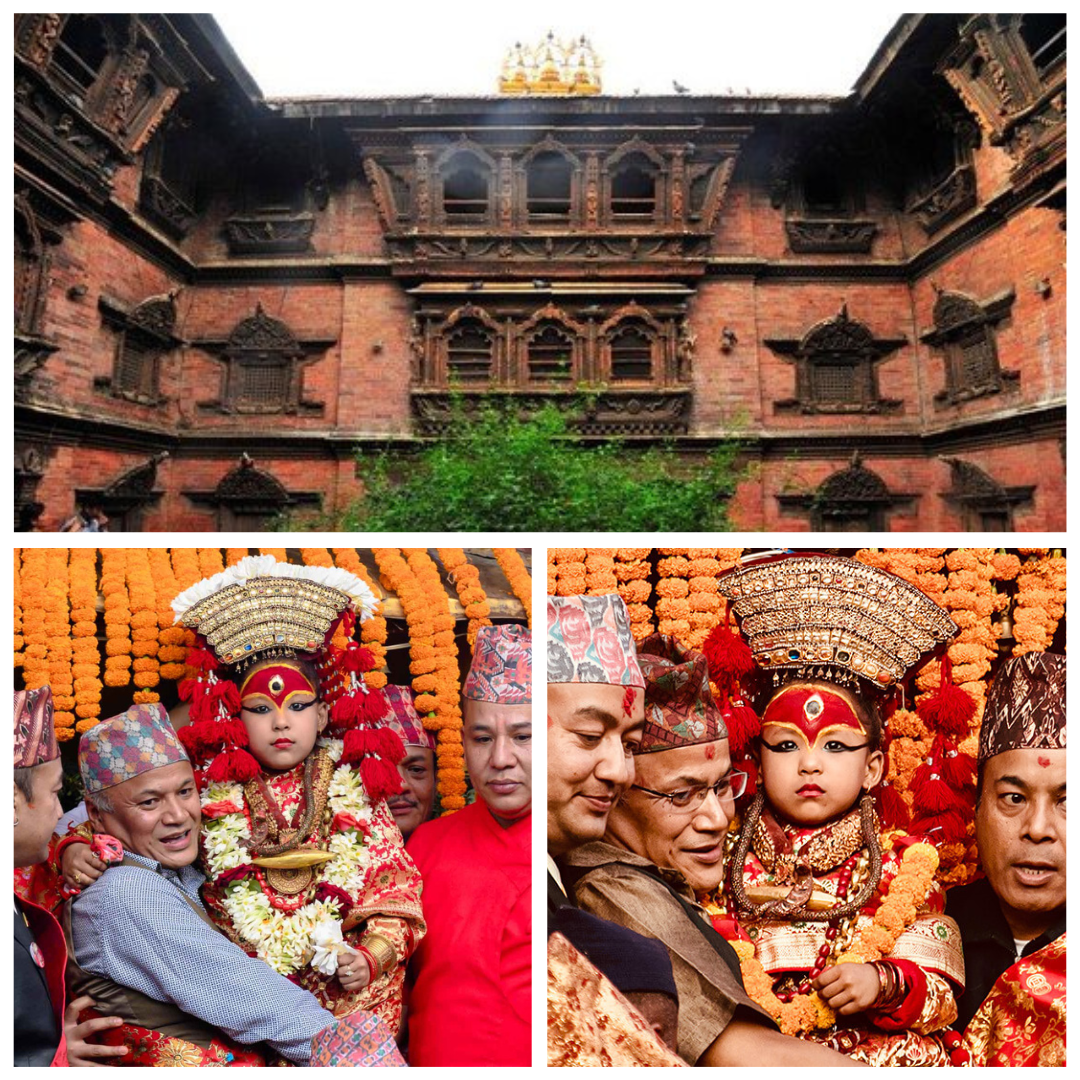
Once selected, the Kumari finally moves into the Kumari Ghar, located in Kathmandu Durbar Square. Here, she lives and is treated like a royal, cared for by attendants, and is seen outside Kumari Ghar only during important festivals like Indra Jatra, where her most significant appearance can be observed. Devotees carry her on a chariot through the city as thousands of people line the streets to receive her blessings.
Kumari: A Life Worshipped and Walled
Despite her divine status, the life of a Kumari cannot attend regular school, play freely outside, or engage in a normal social life like any other girl. Her tenure as a goddess ends with her first menstruation, since the community believes it to be the signal for the departure of the divine spirit from her body. Life after retirement can be very difficult to be back to ordinary society after years of isolation and royal treatment.
The Kumari tradition is a living expression of Nepal’s fusion of Hindu and Buddhist spiritual beliefs that has represented a powerful celebration of feminine divinity and cultural identity. Travelers from around the globe have been visiting Kathmandu hoping to catch a brief glimpse of the Living Goddess.
While the tradition of Kumari: The Living Goddess has come under discussion in recent times due to changing views on children’s rights and education etc., the Kumari still remains a symbol of Nepal’s sacred heritage. For many, she embodies not just an ancient belief system, but the living soul of the Kathmandu Valley itself.

Highlights of Kumari Experience
- Unique Living Goddess Tradition
- Great Religious and Cultural Importance
- An Ancient Kathmandu Setting
- Rare and Unforgettable Encounter
Interested to see the Kumari during your Nepal visit?
Meeting the Kumari is one of Nepal’s most distinctive cultural experiences. She lives at Kumari Ghar in the center of Kathmandu and is revered as a living representation of divine energy.
When she momentarily emerges at the window, visitors frequently congregate in the courtyard in the hopes of catching a sight of her. It’s a silent, almost mystical moment that leaves a lasting impression. If you manage to be there during Indra Jatra, you can see her being transported through the city in a gorgeously painted chariot amid festivities, music, and rituals.
Plan your cultural tour with Explora Nepal Holidays and witness Kumari: Living Goddess of Nepal up close in Kathmandu’s historic Durbar Square.
Email : Info@exploranepalholidays.com
WhatsApp : +977-9840020011 / +9779767648654
FAQ’s
Which cast does the Kumari belong to?
The Living Goddess Kumari traditionally belongs to the Shakya caste, a subgroup of the Newar community in Nepal. She is chosen following centuries-old selection process based on religious and cultural criteria and is worshiped until she reached puberty.
How long does a Kumari remain the Living Goddess?
Kumari remains the living goddess until she reaches puberty or experiences her first menstruation. She may also be replaced if she suffers any injury causing blood loss or infection that alters her physical state. After which a new Kumari is chosen following traditional process.
How old is the Kumari?
The Kumari is usually 2 to 7 years old, chose as a young prepubescent girl from the Shakya caste of Newar Buddhist community in Kathmandu. She remains as the Kumari until puberty or suffers any injury.
Where can Tourists see the Living Goddess Kumari ?
Tourists can see the Kumari at Kumari Ghar (Kumari Palace) in Kathmandu Durbar Square, where she occasionally appears at the window to greet visitors. She also appears during important religious ceremonies like Indra Jatra, where she rides in a ceremonial chariot procession through the city.
Can tourists visit the Kumari Ghar?
Yes, tourists can visit the Kumari Ghar in Kathmandu Durbar Square. You can explore around its ancient courtyards, click pictures and catch a glimpse of Kumari if she appears at the palace window. However, taking pictures of Kumari is strictly prohibited. You should follow the local customs and laws.
When can visitors see the Kumari in public?
Visitors can see the Kumari in public during 3 major festivals; Indra Jatra, Ghode Jatra, and Machindranath Jatra, where she is carried through Kathmandu in a ceremonial chariot procession. She also occasionally appears at her palace window, though this is not scheduled.
Is photography allowed at the Kumari Palace?
Photography is mostly allowed around the palace premises, however, taking pictures of Kumari when she appears is strictly prohibited. Always follow the instructions provided by your guide or palace staff and respect the rules.